If you are coming to Wellington for the season, saving time and stress on show days matters. The right farm lets you tack up at home, step onto a bridle path, and hack straight to the ring. In this guide you will see how Southfields and Saddle Trail compare on hack access, acreage, facilities, pricing patterns, and the rules that shape value. You will also get a practical checklist so you can verify any “walk-to-show” claim before you write an offer. Let’s dive in.
What “walk-to-show” really means
In Wellington, “walk-to-show” means you can ride along the Village’s mapped bridle trail network to reach the show venues without trailering. Always confirm the exact route, gates, and any road crossings on the official Village of Wellington equestrian trails map. Because listings use different phrasing, make sure you know which venue is meant: the main showgrounds at Wellington International or the Adequan Global Dressage Festival at Equestrian Village, which publishes its directions and address. The Village’s bridle paths and Equestrian Overlay Zoning District are documented by Wellington, so start with the Village’s equestrian overview and its planning layers.
Southfields at a glance
Location and access
Southfields sits just south and east of the Pierson and South Shore corridors, within riding distance of both Wellington International and the Equestrian Village. Many parcels were platted for equestrian use, and listings often note direct bridle path frontage or short hacks to the venues. Treat those as seller statements to verify on the Village trails map. Clarify whether the hack route crosses any public roads and which gates you will use.
Lot sizes and facilities
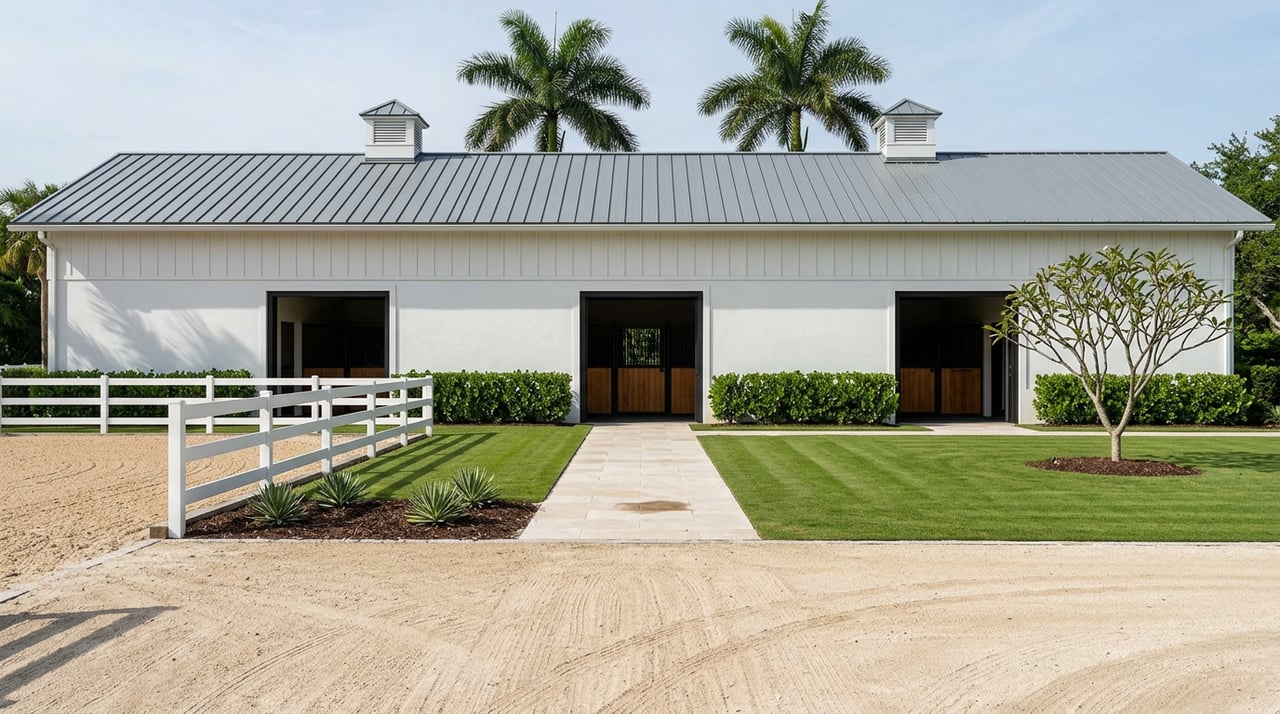
Southfields tends to offer larger acreage that supports professional-scale operations. It commonly includes 5 to 10-plus acre farms with multi-stall barns, arenas, walkers, and multiple paddocks. Inventory also includes some smaller estates around 2 acres, but the neighborhood is known for estate-scale facilities tied to show access. If you need more stalls, more turnout, or training infrastructure, Southfields is often a fit.
Community controls and HOAs
Parts of Southfields include gated pockets and recorded assessments, while other parcels are on agricultural lots with different governance. Confirm the exact legal description for any parcel, the phase or plat, and whether covenants affect barn size, accessory structures, or commercial boarding. Ask for seller disclosures and recorded documents so you know who maintains gates, private roads, and any common areas. Rules vary by phase, so do not assume a single standard across the neighborhood.
Price profile and who it fits
Public listing examples show Southfields farms ranging from the low millions into double-digit millions depending on acreage and improvements. Larger professional facilities with many stalls, multiple arenas, and staff housing command higher tiers. Southfields is well matched to professional trainers, high-level riders, or owners who want privacy and capacity. If you plan to build out a complex or host multiple horses on site, the added acreage can be a key advantage.
Saddle Trail at a glance
Location and access
Saddle Trail is an established equestrian neighborhood inside Wellington’s Equestrian Preserve with shell-rock roads and heavy bridle path frontage. Properties frequently market a 10 to 15 minute hack to the showgrounds through the Village’s trail network. Use the official trails map to confirm the path and any road interactions. Many parcels back directly to trails, which is a major draw for daily show convenience.
Lot sizes and facilities
Typical Saddle Trail parcels run about 2 to 5 acres, with some larger outliers. Facilities often include center-aisle barns in the 8 to 16-plus stall range, standard-sized arenas, and groom or rider accommodations. This scale supports active showing without the overhead of a very large campus. For many riders, the smaller footprint means simpler upkeep while keeping true bridle path access.
Community rules
Saddle Trail is commonly represented as a non-gated, low- or no-HOA area. Individual parcels may have private gates and security, but there are generally fewer shared amenities or architectural controls than in gated developments. Always confirm recorded covenants and parcel-level restrictions before planning improvements. Fewer community rules can add flexibility, though you still must follow Village codes.
Price profile and who it fits
Recent public examples show Saddle Trail farms commonly starting in the low millions for 2 to 4 acre properties, with turnkey show compounds moving into the mid and high millions. Premium sales with large arenas and full operations can reach top-tier prices. Saddle Trail fits owners who want fast hacks to the venues, lower-maintenance acreage, and a functional show base. If you do not need expansive turnout but want daily ride-out convenience, this is a strong option.
Southfields vs Saddle Trail: the quick read
- Access to shows: Both offer true hack routes via the Village bridle path network. Always verify the exact path, gates, and crossings on the Village trails map and confirm which venue you plan to reach.
- Acreage and scale: Southfields often features larger parcels, including 5 to 10-plus acre professional farms. Saddle Trail commonly offers 2 to 5 acre lots that prioritize direct bridle path convenience.
- Facilities: Southfields leans toward multi-arena, high-stall-count training campuses. Saddle Trail often delivers a full barn and arena on a simpler footprint.
- Community vibe: Southfields includes gated pockets and varying assessments by phase. Saddle Trail is generally non-gated with fewer shared controls.
- Pricing patterns: Southfields ranges from low millions to double-digit millions depending on scale and improvements. Saddle Trail often starts in the low millions and scales with stall count, arena quality, and location within the trail network.
- Best fit: Choose Southfields if you need larger acreage and pro-level infrastructure. Choose Saddle Trail if you want a shorter daily hack, a manageable lot, and quick show access.
Regulations that affect value
Equestrian Overlay Zoning District
Both neighborhoods sit inside Wellington’s Equestrian Preserve, shaped by the Equestrian Overlay Zoning District. The overlay guides permitted uses, densities, and design. Before you plan any new barn, ring, or expansion, review the Village’s equestrian planning overview and confirm the parcel’s zoning and overlay status in the Village planning layers. You can also reference the Village GIS MapServer for official layers.
Manure and waste compliance
Wellington requires livestock waste to be removed by registered haulers or managed through a documented program that meets standards. Farms are subject to manure-bin inspections, and the Village can revoke hauler permits for noncompliance. Review the Manure Regulations and BMPs and ask sellers for their inspection records. The Village hosts the current manure bin inspection form you can use as a checklist.
Permits, setbacks, and water protection
Standards address separations from potable wells and water bodies, stormwater and drainage protections, and requirements for watertight structures or concrete pads under roll-off containers. Confirm permits for all barns, arenas, and permanent structures, and ask Planning and Zoning about any outstanding violations. The Village’s equestrian overview is a good starting point, with forms and contacts linked in the manure section above. In gated pockets, also ask about emergency service access and protocols published by Village committees such as the Equestrian Preserve Committee.
Utilities, septic, and tax classification
Some farms connect to public utilities while others rely on wells and septic systems. If you plan to increase stall or occupancy counts, verify septic capacity, water sources, and manure logistics. Agricultural classifications may affect property taxes and have eligibility standards set at the county level. Use the Village’s equestrian overview to frame the questions, then confirm details with county authorities and your advisor.
Buyer due-diligence checklist
Use this quick list to validate any “walk-to-show” listing:
- Map the route: Request a marked path from the property to Wellington International or to Equestrian Village. Confirm gates, crossings, and whether the route stays on Village-maintained bridle paths using the official trails map and venue info at Wellington International and GDF directions.
- Confirm recorded access: Identify whether access is a public trail, Village-maintained path, or private easement. Cross-check plat and GIS layers in the Village MapServer.
- Verify manure compliance: Ask for the farm’s manure-bin inspection records, registered waste hauler documentation, or nutrient management plan. Review the Manure Regulations and BMPs.
- Check permits and history: Confirm permits for barns, arenas, and permanent structures, plus any code cases. Start with the Village equestrian planning overview.
- Utilities and septic: Determine if the property is on public water and sewer or well and septic, and verify capacity for your planned use.
- Facility inventory: Count stalls, wash stalls, tack rooms, feed and hay storage, grooming stalls, walker, arena size, footing type, and any recent footing work. These are key price drivers.
- Emergency access: Ask how first responders access the site and how gates are handled. Review committee resources at the Equestrian Preserve Committee if needed.
- HOA and covenants: In Southfields, confirm phase, gated status, and any assessments. In Saddle Trail, confirm any parcel-level restrictions even if the area is commonly represented as low- or no-HOA.
- Taxes and classification: Request documents for any agricultural exemption and confirm with county offices.
How to choose between them
Pick Southfields if you want more acreage, room to expand, and the infrastructure of a professional training base. The larger parcels can support multiple arenas, more turnout, and staff housing while still offering a hack to the venues. Pick Saddle Trail if your top priority is daily convenience and a straightforward hack on a smaller, easier-to-manage parcel. Many riders prefer the quicker ride-out and simpler operations, especially during the peak show calendar.
Ready to tour hack-to-show farms?
If you are serious about a walk-to-show property for the coming season, we can help you confirm routes, review Village rules, and source both on- and off-market options that match your riding goals. Request a private consultation with Kirsten Kopp Real Estate, LLC to start a tailored search.
FAQs
What does “walk-to-show” mean in Wellington?
- It means you can ride from the farm to the show venues along the Village’s mapped bridle paths; verify the exact route and gates on the official trails map.
How long is the hack from Southfields or Saddle Trail to the shows?
- Many listings market 10 to 20 minute hacks, but you should validate the actual route and time using the Village map and the venue addresses for Wellington International and GDF.
Are there HOAs in Southfields or Saddle Trail?
- Southfields includes phases with gates and assessments alongside agricultural lots, while Saddle Trail is commonly represented as low- or no-HOA; always confirm recorded covenants for the specific parcel.
What permits do I need to build or expand a barn in Wellington?
- Projects must align with the Equestrian Overlay Zoning District and Village codes; review the equestrian planning overview and confirm permits with Planning and Zoning.
How do manure regulations affect a purchase?
- Farms must use a registered hauler or a compliant management program and pass manure-bin inspections; review the Manure Regulations and BMPs and request the seller’s records.
Can I increase stall count after closing in Southfields or Saddle Trail?
- Possibly, but you must confirm zoning, setbacks, utilities and septic capacity, manure-bin standards, and any HOA or covenant limits before planning an expansion.