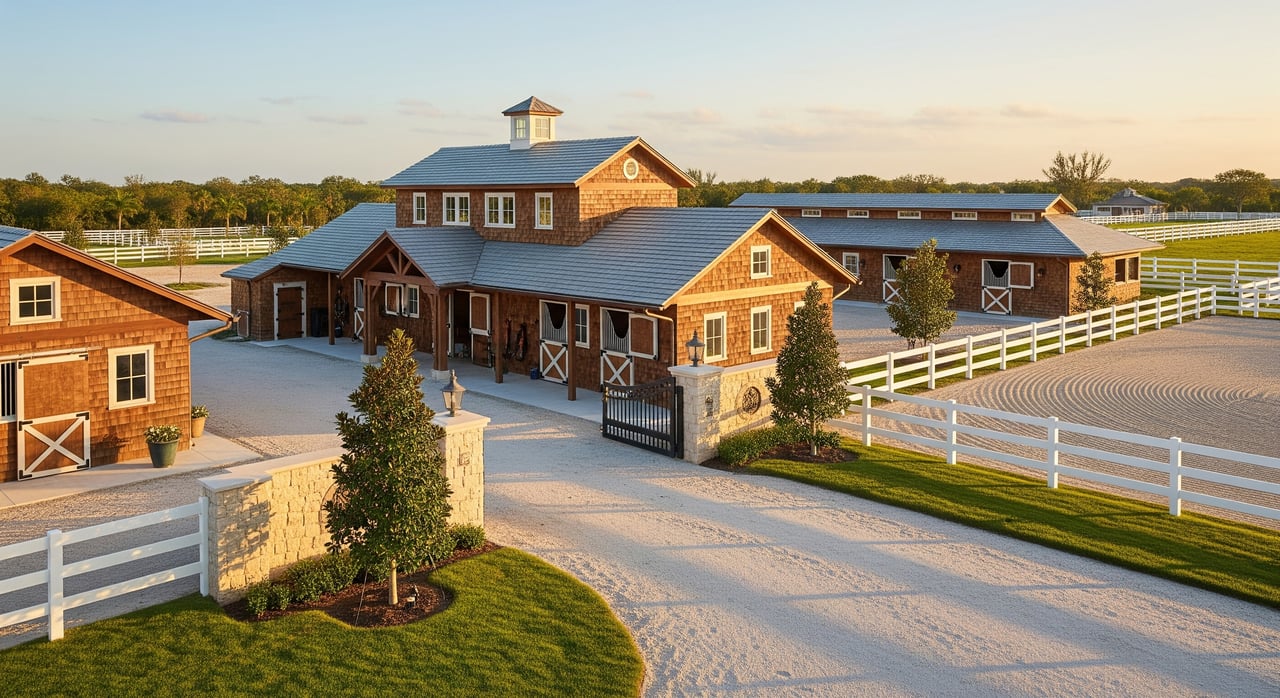
If you own or are eyeing a barn in Loxahatchee Groves, you might be wondering how the Wellington show season could translate into real numbers. You want a clear, adaptable model that captures peak-season demand without guessing on costs or permits. In this guide, you’ll get a practical pro forma you can plug into your own assumptions, an illustrative example, and a local checklist so you can move forward with confidence. Let’s dive in.
Why Loxahatchee Groves matters
Loxahatchee Groves sits in the heart of Palm Beach County’s equestrian scene and is typically a 10 to 20 minute drive to Wellington’s showgrounds, depending on the property. The Winter Equestrian Festival runs roughly December through April and concentrates national and international riders in one place. That surge drives higher seasonal occupancy and premium rates for stalls and full-service boarding. Amenities and proximity influence pricing and marketability, so package your offer accordingly.
Build your ROI model
Revenue lines to include
- Full board, with separate seasonal and off-season monthly rates
- Partial or paddock board at lower price points
- Day or temporary stalls during show weeks
- Training, lessons, and coaching packages
- Add-ons like grooming, clipping, laundry, tack storage, and transport
- Facility rentals for clinics or arena use
- Modest retail markups on feed or supplements, and scheduling fees
Cost lines to include
- Labor for a barn manager, grooms, night checks, and maintenance
- Feed and bedding, including hay, grain, and shavings
- Veterinary and farrier costs, depending on who pays under your policy
- Utilities for wells, pumps, lighting, and office areas
- Arena maintenance, including dragging and footing top-ups
- Fencing, paddock upkeep, and pest control
- Insurance for general liability, property, and equine coverage if you offer it
- Property taxes and any town or association assessments
- Manure management, hauling, and runoff compliance
- Repairs and replacements for roofs, stalls, waterers, and feeders
- Marketing, bookings, bookkeeping, and business licensing
- Capital reserve for larger projects like arena resurfacing or barn remodels
Staffing and service levels
- High-service show barns often plan about 1 groom per 6 to 12 horses, depending on daily grooming, turnout, and show schedules.
- Full-service boarding with standard daily care often runs about 1 full-time groom per 12 to 20 horses.
- Budget for a manager or trainer, night checks, weekend coverage, and extra seasonal help during peak months.
- Include employer taxes, workers’ comp, and any on-site housing or utility allowances in payroll.
Capital and operating inputs to confirm
- Local costs to build or renovate stalls, including runs and drainage
- Arena construction and footing, plus periodic top-up costs
- Fencing costs by type and linear foot
- Septic and well capacity or upgrades
- Hay sourcing and pricing in Palm Beach County
- Insurance premiums for flood and hurricane risk
Illustrative pro forma example
The numbers below are hypothetical and for method only. Always verify current local rates, occupancy patterns, insurance, and financing.
- Barn size: 20 stalls
- WEF season: 5 months, 95 percent occupancy at $1,200 per stall per month
- Off-season: 7 months, 60 percent occupancy at $600 per stall per month
- Other revenue: average $2,000 per month from training, day stalls, and clinics
- Operating expense assumption: 45 percent of gross revenue
- Purchase price: $1,500,000 with 75 percent loan at 5 percent interest, 25-year amortization
Results using these assumptions:
- Seasonal board revenue: 20 × 0.95 × $1,200 × 5 = $114,000
- Off-season board revenue: 20 × 0.60 × $600 × 7 = $50,400
- Total board: $164,400
- Other revenue: $24,000
- Gross revenue: $188,400
- Operating expenses at 45 percent: $84,780
- Net operating income before debt: $103,620
- Estimated annual debt service: about $80,000
- Cash flow after debt: about $23,620
- Cash invested: $375,000
- Cash-on-cash return: about 6.3 percent
Key takeaways: seasonal pricing and occupancy drive a large share of revenue. Payroll, feed, and insurance are big levers on your margin. ROI is sensitive to purchase price and financing, so test multiple cases.
Sensitivity to test
- Seasonal occupancy up or down by 10 to 20 percent
- Seasonal rate up or down by 10 to 30 percent
- Off-season occupancy and rate swings
- Labor changes, including one additional groom or seasonal-only coverage
- Major capital items like arena resurfacing or roof replacement
- Hurricane or flood damage reserves and insurance premium shifts
- Property tax changes and agricultural classification status
Local rules to confirm
Zoning and use
Confirm that commercial boarding or training is allowed for the specific parcel. Check animal density, setbacks, and whether you need a conditional or special use approval.
Building and occupancy
Permits are typically required for barn construction, arena lighting, and any commercial laundry or office conversions. Larger clinics or events may add fire and safety requirements.
Environmental and water
Verify septic and well capacity with the county health department. Check manure management and stormwater rules, including any buffer or drainage requirements that may affect arena or parking expansion. Review FEMA flood zones for insurance impacts and elevation rules.
Taxes and ag classification
Ask the county property appraiser about agricultural classification for potential property tax savings. Confirm eligibility and required documentation for horse boarding operations.
Insurance and liability
Get quotes for commercial general liability, equine liability, property, and wind or hurricane coverage. If you employ staff, confirm workers’ compensation requirements in Florida.
Community considerations
Review local rules on lighting, noise, traffic, and parking. In a rural residential setting, operating hours and clinic hosting may be limited.
Verification checklist and next steps
Use this checklist to build confidence in your plan and reduce surprises:
Market intel
- Call or mystery-shop local barns in Loxahatchee Groves and Wellington to confirm seasonal and off-season rates, occupancy, inclusions, and day-stall pricing.
- Review public listings for amenities and rate ranges. Speak with trainers about packages and expectations.
Property and site due diligence
- Confirm zoning and permitted uses with the town or county.
- Pull FEMA flood zone info and get a preliminary insurance estimate.
- Verify septic and well capacity with the health department.
- Get contractor estimates for stalls, arena, fencing, drainage, and manure management.
Financial verification
- Collect real expense benchmarks for hay, shavings, payroll, and arena maintenance.
- Request historical occupancy, seasonal revenue, and expense ledgers from sellers.
- Run sensitivities on occupancy, rates, and a storm-impact year.
Legal and operational checks
- Confirm liability and workers’ comp coverage with an equine-focused insurance broker.
- Confirm business licensing and any transient or clinic-hosting rules.
Ready to put numbers to a specific property or compare options across Loxahatchee Groves? Our team pairs deep equestrian knowledge with on-the-ground comps and operational insight so you can make a confident decision.
To discuss your plan, review off-market opportunities, or request a custom pro forma, reach out to Kirsten Kopp Real Estate, LLC. Request a private consultation and we will help you move from idea to actionable strategy.
FAQs
What drives seasonal boarding demand in Loxahatchee Groves?
- The Wellington show circuit, including the Winter Equestrian Festival from roughly December through April, creates short-term demand for stalls and full-service care near the showgrounds.
How close is Loxahatchee Groves to the Wellington venues?
- Many barns are about 10 to 20 minutes from the showgrounds depending on location, which supports higher seasonal occupancy and pricing.
What staffing ratio should I plan for a show-focused barn?
- A common guide is about 1 groom per 6 to 12 horses for high-service programs, with tighter ratios if shipping and daily grooming are intensive.
What are the biggest hidden costs when modeling ROI?
- Hay and feed price swings, septic or well upgrades, arena footing replacement, hurricane damage, insurance premium increases, and labor turnover are frequent surprises.
Do I need special permits to board horses commercially?
- You may need building permits for improvements, a business license, and potentially a conditional or special use approval, plus septic and environmental checks. Always verify with local agencies.
Can an agricultural classification reduce my property taxes?
- Palm Beach County offers an agricultural classification that can reduce taxes if you meet criteria and document active agricultural use. Confirm eligibility and requirements with the county.